
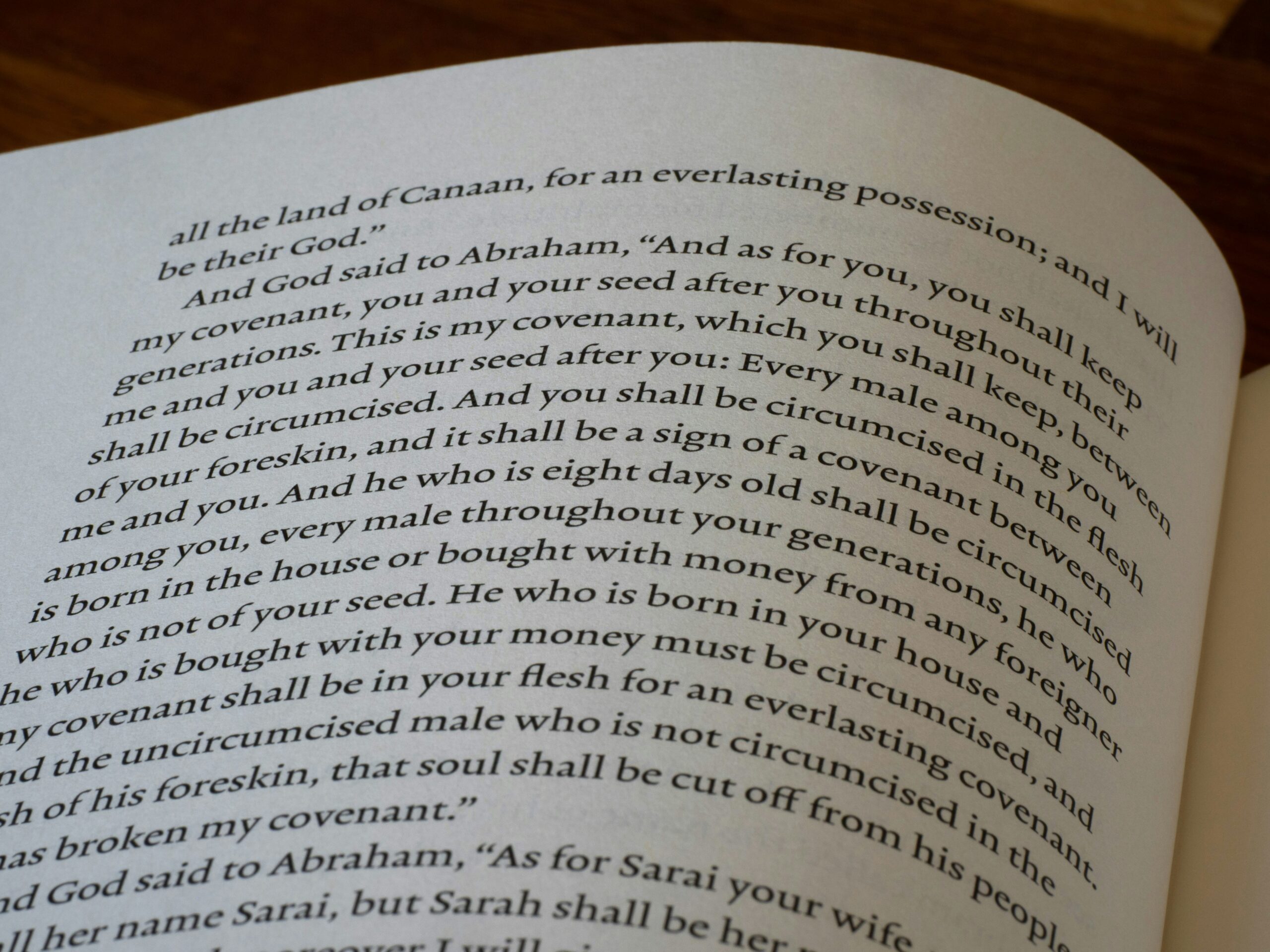
When God commanded Abraham to circumcise himself, He chose that act with purpose. Circumcision was not random. Instead, it served as a visible sign of covenant, obedience, and belonging.
Through this act, God marked Abraham and his descendants as set apart. Furthermore, the covenant promised Abraham a nation of offspring and exceeding fruitfulness. Therefore, circumcision became the sign that distinguished Israel from the rest of the world.
Yet when we step back and examine the story of Scripture, another pattern begins to appear. That pattern leads us all the way back to Adam, to nakedness, and to exposure before God.
Adam’s Nakedness and the Awareness of Sin
At the beginning, Adam and Eve lived in the garden naked and unashamed. Their nakedness reflected innocence. Nothing separated them from God. Nothing caused fear or guilt.
However, sin changed everything.
After Adam sinned, he became aware of his nakedness. At that moment, shame entered his life. Instead of walking openly with God, he hid. Instead of living exposed in innocence, he tried to cover himself.
Because of sin, nakedness began to represent guilt and vulnerability. In addition, exposure began to carry the weight of shame. Humanity learned to hide from God rather than stand openly before Him.
As a result, Adam’s nakedness revealed more than physical exposure. It revealed spiritual brokenness.
Abraham’s Circumcision: A Covenant of Exposure
Centuries later, God formed a covenant with Abraham. This covenant included promises of blessing, fruitfulness, and a future nation. However, God also required a physical sign.
God commanded Abraham to circumcise himself. Through that command, God created a visible mark of obedience. From that point forward, every male descendant received circumcision on the eighth day.
Consequently, circumcision separated Israel from surrounding nations. It reminded each generation that they belonged to God.
Symbolically, circumcision performs a very specific action. It removes what covers. It exposes what was hidden.
In this way, circumcision mirrors the exposure first seen in Adam’s nakedness. The foreskin covers an area that God commands to be revealed. Therefore, circumcision removes the covering as a sign of covenant faithfulness.
Ultimately, the act declares that nothing remains hidden before God.
Circumcision of the Heart: The Spiritual Fulfillment
Later, the New Testament introduces a deeper understanding of circumcision. Paul writes about circumcision of the heart rather than circumcision of the flesh.
This shift moves the focus from physical action to spiritual transformation.
Just as physical circumcision removes what covers the flesh, spiritual circumcision removes what covers the heart. In the same way, sin acts like a covering over spiritual nakedness. It hides truth. It dulls conviction. It prevents honesty before God.
Therefore, circumcision of the heart requires action. A believer must examine his life. He must identify what leads him toward sin. Then he must remove those influences.
This process demands vulnerability. It requires honesty. Most importantly, it calls for a willingness to cut away whatever blocks intimacy with God.
Unlike physical circumcision, this work continues throughout life.
Holiness and Separation From the World
Physical circumcision marked Israel as separate from surrounding nations. It identified them as God’s covenant people. Likewise, spiritual circumcision calls believers to live differently from the world.
However, separation does not mean isolation. Instead, it means transformation.
Although believers live among the world, they must not adopt its values. While grace frees us from condemnation, it does not excuse sin. Forgiveness invites change. It calls us to holiness.
Therefore, Scripture calls believers to live set apart. Christ frees us from the law’s penalty, yet He leads us to uphold righteousness through obedience.
Grace does not lower the standard. Instead, it strengthens the call to holiness.
Becoming Children of Abraham
Scripture teaches that faith connects believers to Abraham. Through faith, they become heirs of promise. However, true faith produces action.
Faith moves the believer toward discipline. It draws him toward obedience. It strengthens his devotion.
Because of this, children of God pursue spiritual disciplines daily. They pray in the Spirit. They meditate on God’s Word day and night. They seek first the Kingdom of God and His righteousness.
Furthermore, they remain watchful.
They guard their hearts carefully. They refuse to allow sin to settle. They remove anything that weakens their devotion.
As a result, vigilance becomes a daily responsibility.
Daily Consecration in a Distracted World
Today, believers face constant distractions. Modern life competes for attention at every turn. Social media fills quiet moments. Games consume hours. Personal pleasures demand time and focus.
These things do not always begin as sin. Nevertheless, they can become coverings that dull spiritual awareness.
Therefore, circumcision of the heart requires daily consecration. A believer must choose discipline over distraction. He must choose devotion over comfort.
In addition, he must seek God first.
Daily consecration involves setting aside noise. It requires intentional focus. Most importantly, it calls for steady commitment.
When believers pursue God’s presence consistently, distractions lose their power.
Living Exposed Before God
Ultimately, circumcision points toward a single truth. God calls His people to live openly before Him.
Adam’s nakedness revealed guilt. Abraham’s circumcision marked covenant obedience. Meanwhile, circumcision of the heart produces spiritual transformation.
Together, these patterns reveal a unified message.
God does not call His people to hide. Instead, He calls them to live in honesty, humility, and surrender.
Therefore, to live exposed before God means living without excuses. It means removing coverings that hide sin. It means walking in truth even when it feels uncomfortable.
This path leads to holiness.
This path strengthens covenant faithfulness.
This path shapes a life of daily consecration.
And ultimately, this path leads to transformation.